Equine Biomechanical Balance

The Harmony of Movement and Structure
The concept of equine biomechanical balance is fundamental to the health, performance, and overall well-being of horses. It encompasses the intricate interplay between the horse's skeletal structure, musculature, neurological and movement patterns. Achieving optimal biomechanical balance is crucial not only for competitive equines but also for leisure and companion horses. It is the right of the equine to have longevity in captivity, and balanced movement enhances that opportunity. Correct biomechanical balance is also the magical elixir of life.
Equine biomechanics is the study of the mechanical laws relating to the movement or structure of horses. It involves analysing how horses move, the forces exerted by their muscles and joints, and how these forces influence their overall locomotion and their ability to compensate for everyday life. The goal is to understand and optimise how horses move to prevent injury, enhance performance, improve neurological responses and ensure longevity. Biomechanical balance is critical in the equine's postural stance, counteracting the forces of gravity on their bodies and translating that live force to the feet they must stand on twenty-four hours a day.
The Skeletal Framework
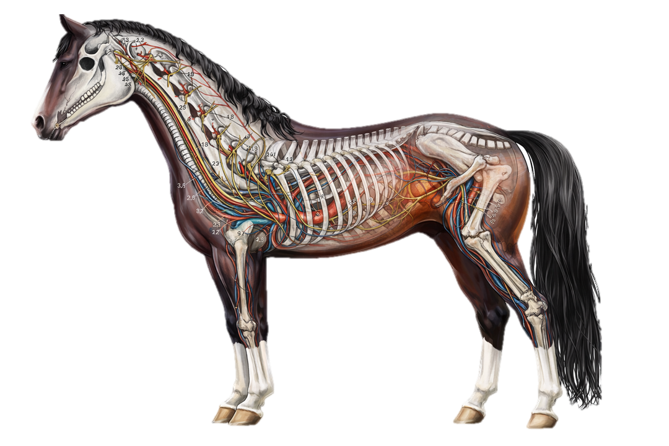
The skeletal framework of a horse comprises approximately 205 bones, over 700 individual muscles, and up to 600 layers of facial planes, providing the foundation for movement and support. These fundamental structural components are then regulated and governed by the central and peripheral nervous systems to form a chain reaction that brings about movement in the equine. Key components of this framework include:
· The Spine: Acting as the central support structure for the animal, the spine extends from the skull to the tail, playing a vital role in movement and flexibility. The muscular system is attached along the entire spine, and when exercising, muscle tension triggers compensation patterns throughout the entire equine body.
· The Limb Bones: The forelimbs and hindlimbs are critical for locomotion. The anatomy of these limbs, including the scapula, humerus, radius, and ulna in the forelimbs and the femur, tibia, and fibula in the hindlimbs, is designed to absorb and distribute impact forces. The limb bones are integral to the animal's movement phase, and when compromised, they impact the limb's timing, swing phase, joint breakover, and soft tissue attachment sites. And are recalibrated by the nervous system and seen in the spine's compensation patterns.
· Joints and Cartilage: Joints, such as the fetlock, hock, and stifle, facilitate movement by allowing bones to articulate smoothly. Cartilage within these joints acts as a cushion, reducing friction and wear and tear. The cartilage of the body lacks pain receptors; pain-related behavioural traits can take time to be observed in the equine.
· The interphalangeal Joint: The Distal Interphalangeal Joint is the fundamental structural component that carries the loading of the animal's body. When an imbalance in either the hoof capsule or improper orthopaedic loading from the upper body influences this joint, it is reflected in the external shape of the hoof capsule.
The Muscular System
The muscular system works in tandem with the skeletal framework to produce movement throughout the equine body. Major muscle groups in horses include:
· The Neck and Shoulder Muscles: These muscles, including the trapezius and brachiocephalicus, aid in the movement and stabilisation of the head and neck. The neck of the equine is the counterbalance for the rest of the body, and it must remain in its neutral position for the correct orthopaedic balance of the animal.
· The Back Muscles: The longissimus dorsi and latissimus dorsi muscles support the spine and facilitate the horse's back movement. The multifidus muscles are strong postural muscles and, along with the other neck and back muscles, have a significant role in stabilising different segments of the equine spine and providing stability for the equine spinal column.
· The Limb Muscles: Muscles such as the biceps brachii and triceps brachii in the forelimbs and the quadriceps and hamstrings in the hindlimbs are crucial for propulsion and stability. These groups of muscles and others found in the equine body are all susceptible to the forces of gravity, and when orthopaediclly compromised, they trigger compensation patterns in the equine muscular system.
The animal needs correct alignment for harmonious movement.
Biomechanical balance is the harmonious function of the horse's body during movement. It involves multiple factors that all must work in a chain-like reaction.
Proper alignment of the horse's body ensures that weight and forces are evenly distributed across the skeletal and muscular systems. Misalignment can lead to uneven wear, strain, and injury. Misalignment leads to the descending forces through the individual limb entering the distal joints of the equine limb orthopaediclly, incorrectly affecting the internal and external hoof connections and shape.
Symmetrical movement is a key indicator of biomechanical balance. Any asymmetry or irregularity in gait may indicate underlying issues that require attention through training or medical intervention. Asymmetry in the animal's upper body will produce an orthopaedic imbalance in the feet of the animal.
A horse must maintain stability while moving at various gaits and speeds. This correct movement requires a coordinated effort between the central nervous and musculoskeletal systems to adjust and respond to changes in the gravitational forces acting on the dysfunctional body and then adjust and respond to changes in terrain and movement patterns. This dynamic stability then falls to the distal interphalangeal joint of the equine foot.
Therefore, achieving and maintaining biomechanical balance is essential for several reasons:
Correct biomechanical balance reduces the risk of injuries such as strains, sprains, and fractures. Horses can move more efficiently and safely by ensuring that forces are evenly distributed throughout their body. When the various systems of the equine body are functioning properly, the immune system can swiftly respond to any sudden trauma; however, a dysfunctional system takes more time to cope with the additional stress and forces placed on the body.
For performance horses, biomechanical balance is crucial for optimising speed, agility, endurance and behaviour. Balanced movement enables horses to reach their full potential in all disciplines, enhancing their lives through improved breathing rhythms, postural stance, and trainability when all systems are in balance.
Horses with good biomechanical balance tend to have longer, healthier lives. They are less prone to chronic conditions such as arthritis, degenerative joint disease, and hoof issues, which can significantly impact their quality of life.
When assessing and correcting, biomechanical balance involves a multidisciplinary approach:
A thorough veterinary examination can identify structural or functional issues affecting a horse's biomechanical balance. Diagnostic tools such as X-rays, ultrasound, and gait analysis are commonly used. Having a qualified equine chiropractor examine the animal after any injury or strenuous work sessions can significantly influence the animal's healing process and recovery time. The longer compensation patterns remain unchecked, the long it takes to repair.
Proper hoof care is vital for maintaining biomechanical balance. A skilled farrier can ensure that hooves are correctly trimmed and shod to support even weight distribution and movement. They should also include the tendons and ligaments of the distal limb as part of their analysis approach to the orthopaedic balance and biomechanical balance throughout the equine body.
Equine therapists and chiropractors can address musculoskeletal issues through techniques such as massage, stretching, and spinal adjustments. These therapies can enhance flexibility, mobility, and stability, reduce pain, and improve overall balance and coordination. Acupuncture is also an acceptable healing therapy for the equine when in the hands of an experienced, fully qualified practitioner.
Conclusion
Equine biomechanical balance is a complex but vital aspect of horse care, especially equine hoof care. By understanding and optimising the interplay between a horse's structure and movement, as well as the compensation patterns that occur when imbalanced, owners and trainers can ensure their horses remain healthy, perform at their best, and enjoy long, fulfilling lives. Pursuing biomechanical balance is a commitment to the equine athlete's ultimate well-being, whether for competition or companionship. When we combine the biomechanical movement and the orthopaedic balance of the equine under the umbrella of equine biomechanical medicine, we have the ability and resources to provide our horses with the longevity and destiny they deserve.

Comments